


 Lydia Maguire
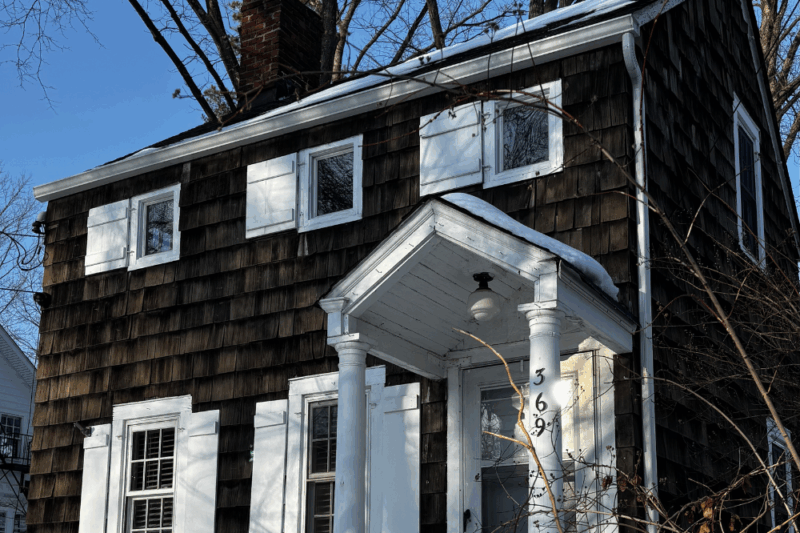
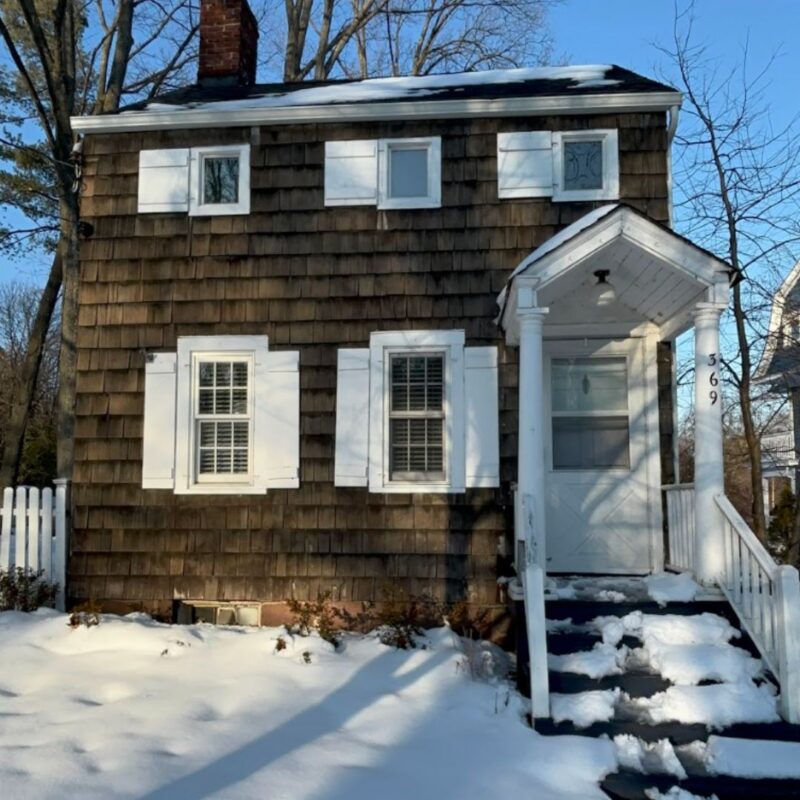
At 369 Claremont Ave in Montclair, a tiny brown house stands tall and proud between its two larger neighbors. It has every reason to. This is the James Howe House, believed to be the first home owned by a Black resident in Montclair, and one of the clearest, most tangible links we have to the people who helped build this town while being denied the benefits of it. We visited the house and spoke with Kimberly Latortue, President of Friends of the Howe House, and resident historian Betty Holloway, about what we know, what we are still learning, and why this history matters. Stepping inside feels like stepping into a living question. The rough-hewn wood, the stone, the narrow stairs, the marks of daily life still embedded in the structure. It makes you want to listen closely, and it makes you want to protect it. Read on to learn more about the Howe House and what it reveals about Black history in Montclair.
A Brief History of Slavery in New Jersey
Because New Jersey fought with the North in the Civil War, many people assume slavery was not deeply rooted here. The truth is that New Jersey was among the last states in the North to fully let it go.
Read More: The Nutley Museum: A Journey Through Essex County History
Dutch settlers, followed by the British, first brought enslaved Africans to New Jersey in the 1600s. But enslaved labor was not a side note in the state’s early growth. In some cases, settlers were even awarded more land for each enslaved person they owned. According to research done by Rider University, “by the 18th century, 75% of New Jersey’s enslaved people lived in the six counties of Bergen, Essex, Somerset, Middlesex, Monmouth and Hunterdon.”
In 1804, New Jersey passed a law called “An Act for the Gradual Abolition of Slavery.” It sounded like the start of freedom, but it was not freedom as most people imagine it. Under the law, children born to enslaved mothers after July 4, 1804 were not freed at birth. Girls would be considered free at 21, and boys at 25. Until then, many were “bound out,” placed into labor arrangements that looked legal on paper but functioned as forced labor in real life. Some enslavers even abandoned children to local officials, called Overseers of the Poor, who then placed them into these work contracts.
So even while the state used the language of abolition, it created two tracks at once: people still enslaved for life, and young people forced into years of unpaid servitude before they could be “free.” In the day-to-day, the lines blurred, and it often looked and felt the same.
This gradual approach was not unique to New Jersey, by the way. Similar laws existed in Pennsylvania, Rhode Island, Connecticut, and New York, and they shared the same core goal: to soften the financial “loss” for slaveholders by keeping labor in their hands for years, sometimes decades.
Then came President Abraham Lincoln’s ‘Emancipation Proclamation’ on January 1, 1863. Even that did not immediately free everyone. It applied only to the Confederate states in rebellion, not to Union-loyal border states, and not to areas already under Union control. New Jersey did not fully end slavery until the 13th Amendment became federal law in December 1865, a law which New Jersey bitterly refused to ratify. The state’s formal shift didn’t come until January 23, 1866, when Governor Marcus L. Ward signed an amendment ending slavery in New Jersey as one of his first actions in office.
That timing matters. As Lorraine Noelle Williams, Director of the African American History Program at the New Jersey Historical Commission, has noted, “the institution of slavery in New Jersey survived for months following the declaration of freedom in Texas [Juneteenth].”
Who is James Howe?
So who was James Howe, and how did he come to own a home in Montclair?
According to Betty Holloway, it is estimated that James Howe was born around the year 1786 and was enslaved by Major Nathaniel Crane. This is significant because “the 1804 ‘Act for the Gradual Abolition of Slavery’ in New Jersey did not free any currently enslaved people, including men over 30 years old. The law only applied to children born to enslaved mothers after July 4, 1804.”
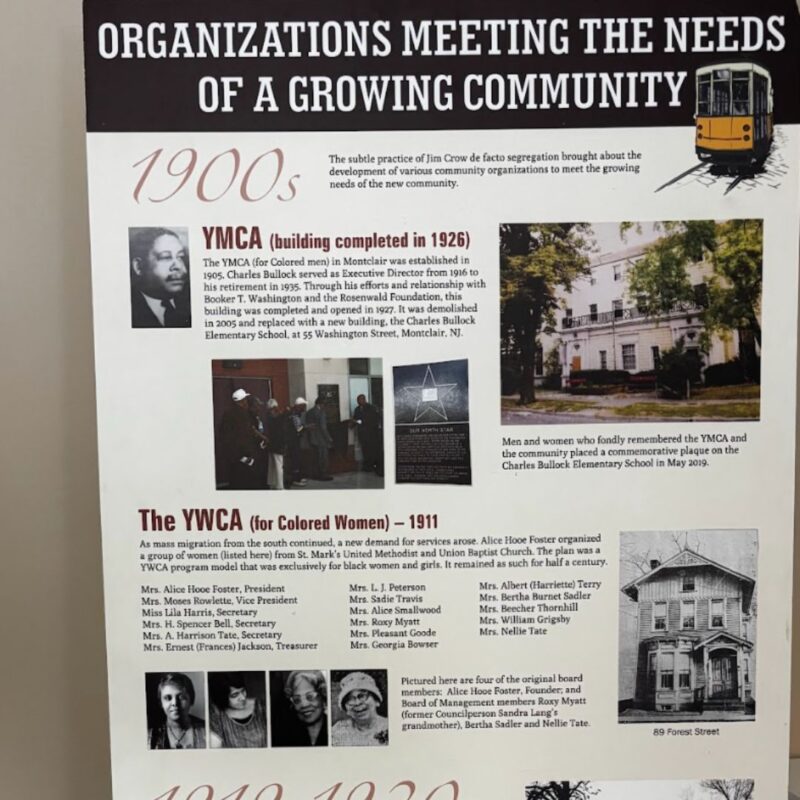
The Crane family was a prominent and wealthy family closely tied to the early development of Cranetown, the area that would become Montclair. They also built that world through enslaved labor.
Not much is known about the nature of the relationship between Nathaniel Crane and James Howe, but that gap is part of the story. Black lives were often documented only in fragments, if they were documented at all. What does surface in local references is that James was known around town and called “Uncle Jim,” and was described as an amiable and familiar community presence.
See More: Nicolo’s: Montclair’s OG Italian Bakery + Deli
What we do know is that James Howe was manumitted by Nathaniel Crane in the year 1817, when he was estimated to have been between the ages of 33 and 36. We also know that Nathaniel Crane did not have heirs. In his 1831 Testament and Last Will, 14years after James Howe was freed, Crane left James Howe a remarkable bequest: the house on what was then called “The Old Road” (now Claremont Avenue), $400, and approximately six acres of land. According to Kimberly Latortue, Crane did not leave a comparable sum to his own nephews, which has led some historians to wonder about the nature of their connection, including speculation that James Howe may have been an illegitimate son. That is not proven, but the unusual size of the bequest raises questions that historians continue to explore.
“Second. …and to James How a colored man late a slave whom I manumitted I bequeath the sum of four hundred dollars… Third. I likewise devise to the above named James How to his heirs and assigns my lot of land… containing about six acres.”
1831 Testament and Last Will of Nathaniel Crane
Census records help fill in more. In 1840, four “free persons of color” are recorded in the home: two adults and two children. By 1850, the household lists James Howe, a 64-year-old blind laborer, and Susan Howe, age 63. Their children, James Henry and Delilah, are not listed in that census, suggesting they may have moved away by then. The 1850 census also shows another free Black family living next door, Francis and Mary Oliver, along with their three children. Historians believe these records point to something bigger than one home: the beginning of a small, free, Black community growing around the Howe House.
Old maps add another layer. The property appears labeled with the Howe name in later records, and by the mid-1800s, the name “Henry Howe” appears, suggesting that James and Susan’s son inherited the home.
The lack of information on Susan Howe- where she came from, whether she was a freed slave as well, or could she have been an escaped slave- and the lack of information on Delilah Howe did not go unnoticed or unmourned.
The James Howe House
The James Howe House is small, warm, and surprisingly powerful once you are inside it. The layout is simple: an open living and dining space with a large brick fireplace, a compact kitchen, a bathroom on the first floor, and one bedroom upstairs.
One of the most striking discoveries is that the fireplace, once covered by sheetrock during the home’s years as a rental, has been uncovered again. Inside, an original iron arm for hanging kettles is still attached. It is the kind of detail that instantly collapses time. You can picture a pot over the fire, the work of a day, the rhythm of a household.
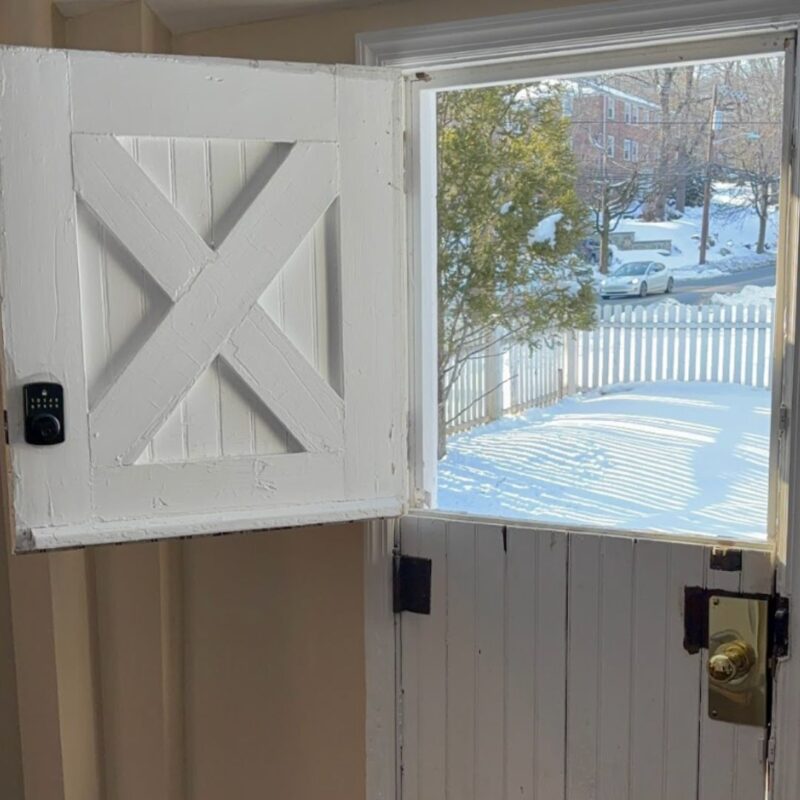
Down in the basement, the original stone and brick are visible, and the doors are fitted with hand-cut wooden slats. Nothing is perfectly even, and that is exactly the point. The house is not an idea of history. It is history you can touch. Our personal favorite detail is the Dutch door off the dining area that opens out to the garden, which blooms each spring thanks to the Rotary Club. Preservationists and archaeologists have also worked to uncover original wall materials and use nails and construction methods to help date the home.
Why Preservation Matters Here
The house remained in the Howe family for generations, but over time, the family sold off pieces of the original land. This kind of gradual land loss was a common outcome of structural racism. Black families were more likely to be shut out of fair loans, steady wages, and legal protections, and more vulnerable to property taxes, inheritance costs, repairs, and emergencies. Even when land was earned or inherited, keeping it was often the harder fight.
Eventually, the home was bought and used as a rental property. Then, in 2022, a coalition of community members and supporters purchased the house for a nonprofit now known as Friends of the Howe House, with the goal of preserving it and building out its public history.
That work is ongoing, and it is not easy. Friends of the Howe House continues to dig through census records, newspaper archives, journals, maps, and property documents to piece together the fuller story, not just of James and Susan Howe, but of the Black families who lived, worked, and formed a community here. One of the challenges is straightforward and heartbreaking: adequate records of Black residents were not consistently kept, and when they were, they were often incomplete or written from someone else’s point of view. Research takes time, patience, and resources.
Still, the work continues because the stakes are bigger than one building. Preserving the Howe House is about keeping a physical anchor for a history that is too often treated as optional. It is about telling the truth about Montclair’s beginnings, who labored here, who lived here, and who fought to build a life in a state that delayed freedom long after it should have been unthinkable.
This Juneteenth, Friends of the Howe House will again host its cocktail fundraiser, an evening rooted in community, culture, and storytelling, to support this preservation and research work. For more information on this event, visit their website.
The significance of the Howe House cannot be overstated. Before New Jersey officially ended slavery, James Howe had been manumitted, received property, and became the first Black man known to own a home in Montclair. He lived there as a free man, with his free wife, Susan, and their free children, Delilah and Henry. That is not just a local detail. It is a piece of American history, sitting right here on Claremont Avenue, asking us to pay attention and keep it standing.
Follow @themontclairgirl on Instagram + TikTok for the latest Montclair updates, sign up for our weekly newsletter here that shares everything you missed each week, and check out our events calendar, which has over 100+ events weekly to peruse.