


 Lydia Maguire
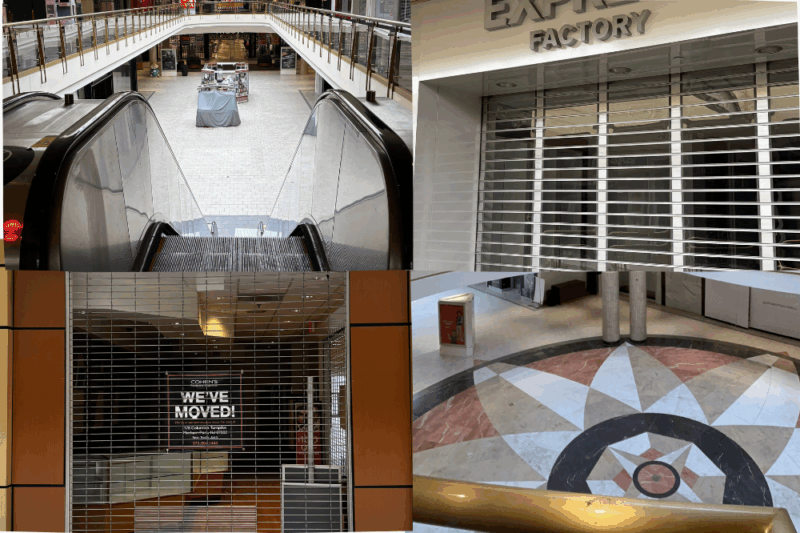
It’s no secret that malls across America are on their last breath, a dying relic from the pre-Amazon, pre-two-day-shipping era. But walking through Livingston Mall lately, what was once the watering hole of suburban life, it doesn’t just feel quiet. It feels like we’re witnessing the slow closing of a chapter of our collective history.
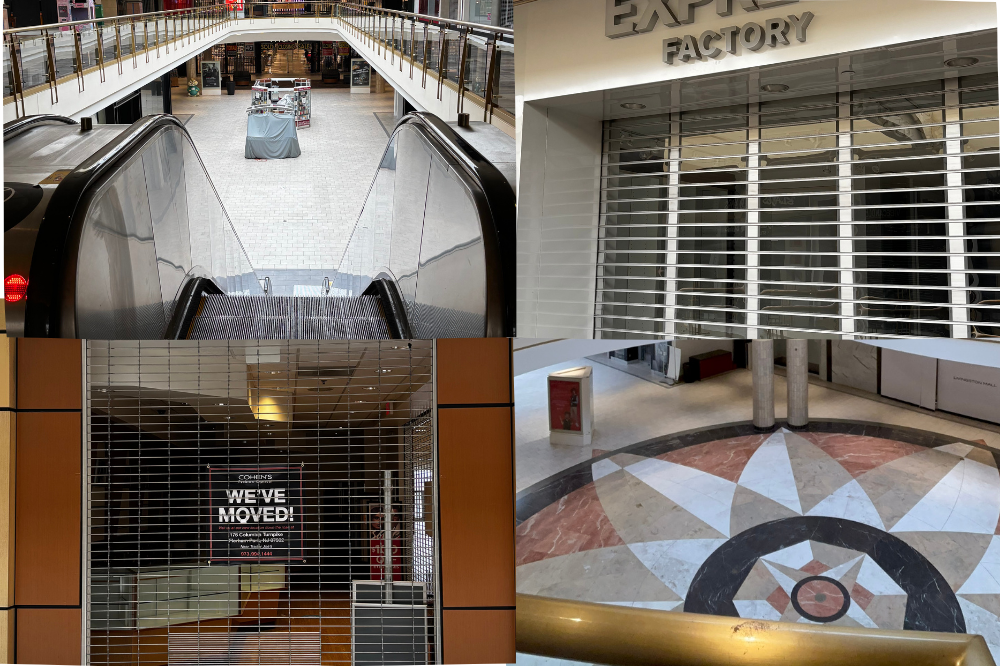
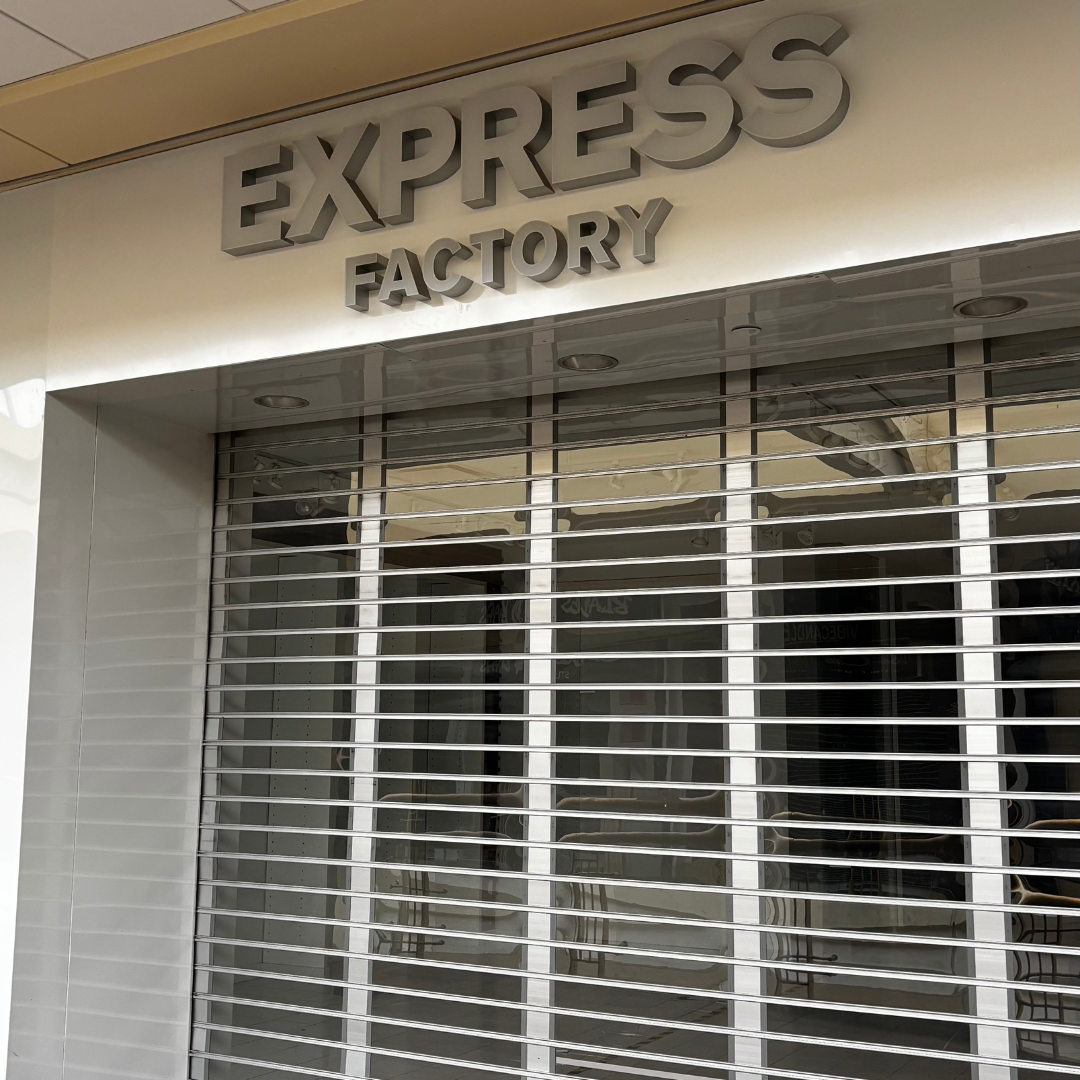
The halls are wide and glossy, built for crowds that no longer come. Your footsteps echo in a way that makes you instinctively lower your voice. Storefront windows are plastered with “Closing Soon” and “Retail Space for Rent” signs, and behind them are vacant rooms with empty shelves. And the lingering question hangs in the air: how many other places like this exist across the country, still standing, still lit, but essentially paused in time?
That feeling got even more real this month when two of the mall’s biggest remaining anchors announced they are leaving. On January 6, Barnes & Noble confirmed it is relocating to Livingston Shopping Center at 530 West Mount Pleasant Avenue (the old BuyBuy Baby location) by mid-to-late 2027. Two days later, on January 8, news broke that the Macy’s at Livingston Mall is also closing by April 30, 2026 as part of the company’s “Bold New Chapter” strategy, which includes shuttering a number of underperforming locations nationwide. For longtime shoppers, it reads like the proverbial nail in the coffin for a mall that has already been clinging to a pretty doomed raft. Read on for what we know so far, what this means for Livingston Mall, and what may be next for this massive property.
There Once Was a Mall Found in Livingston
Livingston Mall has been a staple in the community since it opened in 1972. For decades, it offered the exact kind of one-stop shopping that made malls feel like a little universe. You could browse at a department store, grab a snack, bump into someone you knew, then wander into a bookstore and lose track of time.
At its peak, the mall had heavyweight anchors like Sears and Lord & Taylor, plus Macy’s and a Barnes & Noble that, for many people, became more than just a store. It was a routine. A place to take kids on rainy days. A place to meet a friend for coffee and get your steps in while you window-shopped. A place to browse without needing a reason.
But malls rely on momentum. And like a lot of traditional retail spaces, Livingston Mall’s momentum started slipping long before anyone had heard the phrase “online-only.”
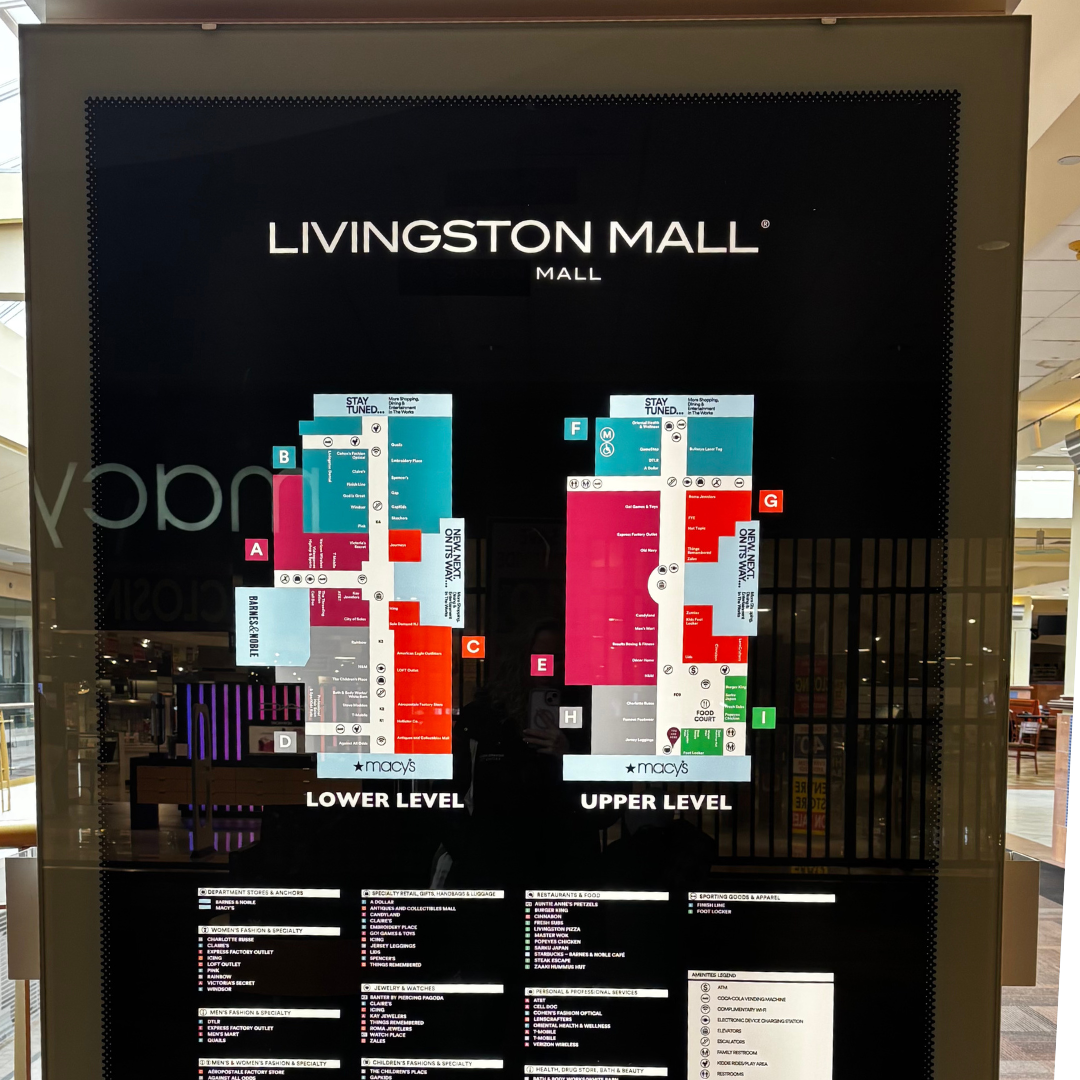 There are dozens of malls across New Jersey that are still fully operational. Of those malls, 13 are owned by Simon Malls, a real estate investment group that invests in shopping malls and outlet centers. Simon Malls is the largest owner of shopping malls in the country.
These malls still have one or more anchor stores, which are typically a large, well-known retailer situated at the ends or center of a mall to draw more customer traffic. For instance, Jersey City’s Newport Centre, commonly known as Newport Mall, has AMC Theatres, JCPenney, Macy’s, Primark, Kohl’s, and Dick’s House of Sport. Simon Malls tend to be strictly retail with few entertainment options.
American Dream in East Rutherford has combined retail and entertainment venues, creating a space much bigger, and with more diverse offerings than an average mall. There are plenty of stores to shop in, like Primark, Apple, Best Buy, Old Navy, and more. What sets the American Dream is all the parks and attractions at the mall. There’s the Nickelodeon theme park, DreamWorks Water Park, indoor skiing, aquarium, mini golf, laser tag, movie theater, bowling alley, ice skating rink, and more. The transformation project was first proposed in 2003, and the final opening phase was completed after the pandemic in 2021.
A Gathering Place Fifty Years and Then
If Livingston Mall’s decline has felt slow, it’s because it has been. The mall didn’t suddenly collapse overnight. It’s been losing pieces one by one. Sears closed in February of 2020, taking with it a huge footprint and a major reason some shoppers made the trip in the first place. Lord & Taylor followed, closing after the company filed for Chapter 11 bankruptcy at the tail end of 2020. Each departure left behind more than an empty storefront. It left behind less foot traffic, fewer reasons to come, and that creeping feeling that the mall was becoming a place you pass through instead of a place you go to.
When the pandemic hit, brick-and-mortar retail took a beating everywhere, and Livingston Mall was no exception. It’s as if the mall caught Covid in 2020 and never quite recovered. Stores continued closing, the corridors got quieter, and the energy changed.
Read more: Raising Cane’s to Open First Essex County Location This February
Over time, Macy’s and Barnes & Noble started to feel like the last stand, the holdouts that still brought people in. Even if you came for something else, you might still wander into Barnes & Noble. You might still hit Macy’s for a last-minute gift. They were the anchors keeping the building from feeling completely hollow.
This isn’t unique to New Jersey; malls are closing across the country. According to data from Capital One, the nationwide mall vacancy rate is 112% higher than the overall average retail vacancy rate as of the end of 2024. Projections from that research indicate that up nearly 87% of large shopping malls could close over 10 years. An average of 40 shopping malls closed every year between 2017 and 2022, and 2 million square feet of mall space was demolished in 2022.
Here’s a breakdown of the status of New Jersey malls on the decline or closed between 2015 and 2025.
- Phillipsburg Mall | Phillipsburg, NJ
- This mall shut down in 2020 and is currently being transformed into a logistics and warehouse complex.
- Brunswick Square Mall | East Brunswick, NJ
- Construction began on this mall at the end of 2025 to redevelop it into an open-air shopping concept with housing. Some stores are still open during construction.
- Livingston Mall | Livingston, NJ
- Although not fully closed, the Livingston Township Council adopted a plan to redevelop the space for housing in March 2025.
- Hamilton Mall | Atlantic City, NJ
- Not fully closed, but there are reports of many vacant storefronts and significant tenant loss.
- Playground Pier | Atlantic City, NJ
- This former outlet mall was transformed into a film studio and live entertainment venue by ACX1 Studios in 2024.
- Monmouth Mall | Eatontown, NJ
- This mall is undergoing construction to become “Monmouth Square,” an open-air center with luxury apartments, restaurants, walking paths, and event space.
The biggest reason for this shift is changing consumer habits. Especially towards the end of the COVID pandemic, there was a boost in e-commerce sales because of local restrictions, according to the International Trade Commission. There was a dip in e-commerce sales in 2022 when restrictions loosened, and people ventured back out to the stores, but it has since continued trending up due to the convenience of shopping online.
The Lights Dimmed Down Low
When I first Googled Livingston Mall, Google actually listed it as “permanently closed.” That’s not quite true (at least not yet), but it tells you something about the mall’s current reputation and visibility.
Inside, it’s a strange mix of still operating and already over. In Barnes & Noble, things feel almost normal in a Stepford way you can’t quite put your finger on. The shelves are full. The café is still making lattes, even if the tables sit vacant. Helpful clerks are still there when you need them. But there’s no laughter in the kids’ section, only a few people browsing, and (almost eerily) no line at the register.
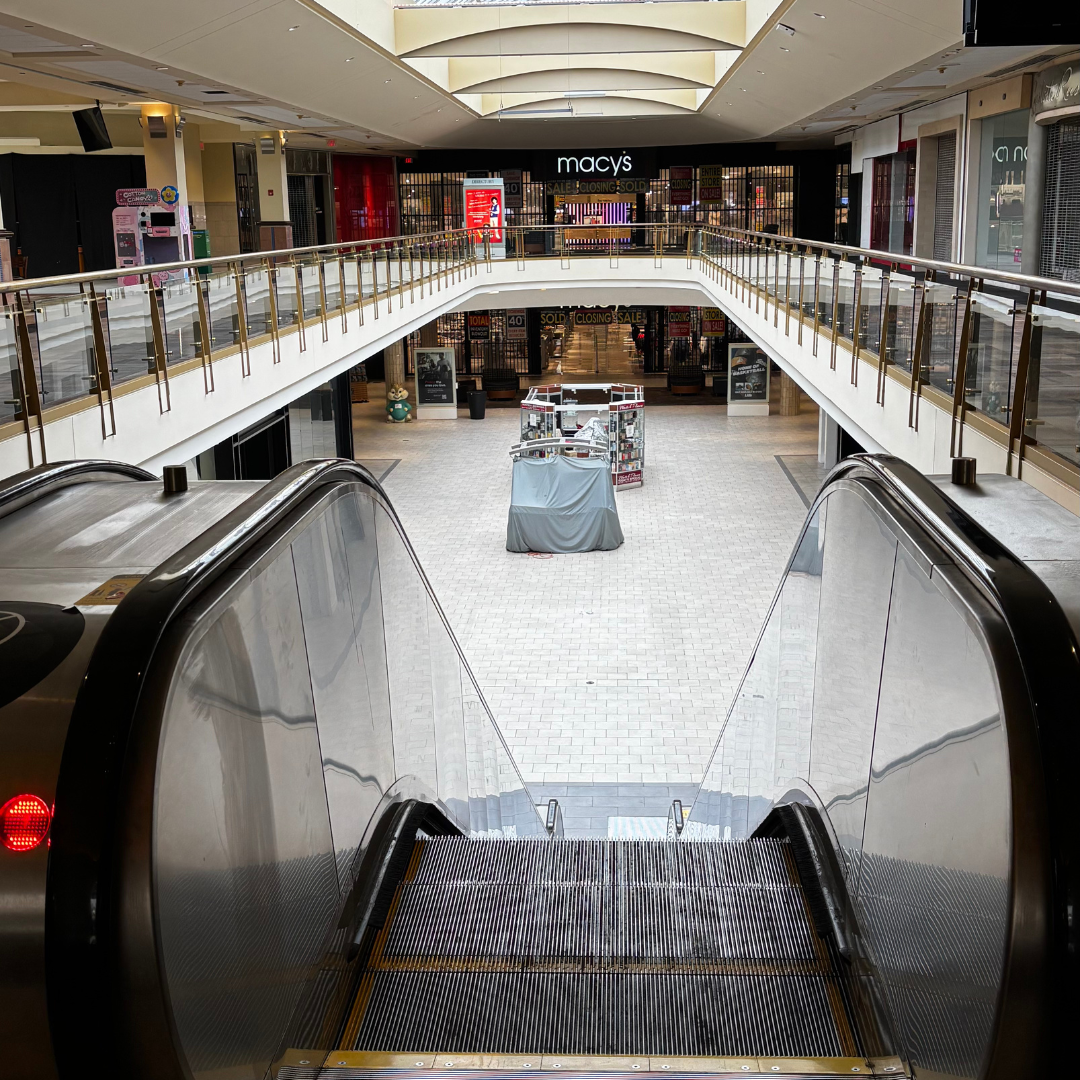
On the other end of the mall, Macy’s is holding a storewide sale: everything must go. Some racks are empty. Others are in complete disarray, with no one left to tidy up after the scavengers. In a corner sits a cluster of miserable-looking Christmas trees that do absolutely nothing to lift the spirit. If anything, it makes it feel worse.
Beyond those two anchors, only a handful of stores appear to remain open. Many have sale signs. Most were empty. The lighting throughout the mall flickered on and off. Some sections were bright, others dim. The escalators weren’t moving. The second floor was practically a dead zone, except for the food court, where one lone Popeyes was open with a handful of people eating or waiting on food. Even Cinnabon was closed, which honestly felt like its own symbolic moment. Malls used to be fueled by the smell of cinnamon sugar. When the cinnamon disappears, you know something is really off.
On the main level, the remaining life is scattered and fragile. One of the only places pumping out music was a store called Quails, volume cranked like it was trying to will customers into existence. Ann Taylor LOFT had its lights on and 75% end-of-season signs, but no customers to tempt inside. A lone attendant manned a desk at a cell phone shop, and I felt weirdly guilty when he looked up with a flash of hope and then realized I wasn’t there to buy anything. Hidden Treasures had a 50% off and BOGO storewide sale running at the same time while it packed up shelves.
The rest of the mall was hauntingly quiet. Not in a peaceful way. In a foreboding way that makes your skin prickle, like you’re wandering around in a post-apocalyptic sci-fi movie, half expecting something to come charging around the corner.
And Crowds Stopped Their Flow
Still, as hard as it is to watch a place tied to so many memories slowly fade out, Livingston Mall has been on the Township’s radar as a redevelopment project.
In 2024, Livingston Township declared the mall area “in need of redevelopment” and launched a community engagement process to gather input about what residents want to see for the site’s future. One of the first major proposals focused on the former Sears area. The plan, as discussed publicly, included 376 housing units tied to the township’s Fair Share Housing obligations, though the formal site plan is still pending.
But as the rest of the mall continues to decline, and now with Macy’s and Barnes & Noble leaving, it’s not hard to see why the conversation has expanded into something larger. The mall site is huge. It sits in a region where housing demand is high. And the traditional shopping mall model has simply stopped making sense in a lot of places.
What Livingston appears to be inching toward is a more modern model: higher-density housing paired with retail, community space, and walkability. No final plan is in place yet, but generally that kind of shift can look like apartments and condos, ground-floor shops, public plazas, green space, and a place you can walk through for reasons beyond shopping.
Some malls in New Jersey are closing to be transformed. In 2025, the Brunswick Square Mall in East Brunswick closed its doors to prepare for a major renovation. The plan is to replace the 750,000-square-foot enclosed shopping mall format with an open-air design that will include new storefronts, medical offices, and entertainment venues.
Some of these New Jersey malls are also being seen as an opportunity for housing. The Westfield Garden State Plaza in Paramus is being redeveloped into a space that combines retail and residential living. The plan is to start construction on 550 luxury apartment homes right near the mall. In the future, developers are also looking to incorporate a hotel, medical offices, and senior living on the Garden State Plaza property.
“For potential residents, the development will not only offer housing, but a sense of community and easy access to a host of amenities, including retail, dining, and entertainment options,” Wesley Rebisz, Senior General Manager of Westfield Garden State Plaza, shared online. “For the greater Paramus area, the development will provide a green space that we plan to activate with exciting family-friendly activities. The proximity to the mall will also offer the potential for increased foot traffic for our retailers.”
Governor Mikie Sherill is also working to make the state more affordable, and says that starts with housing. The Governor’s plan is to work with local governments to convert underused office parks and strip malls into homes and mixed-use projects to increase housing inventory. Governor Sherrill is a noted fan of malls, hosting her January 2026 Inaugural Ball at the American Dream Mall.
Til New Dreams Stirred Again Back in Livingston
For some people, the closure news is practical. Where do I shop now? Where do I browse books now? What happens to the employees? For others, it feels personal. Malls are emotional landmarks. They hold memories even when we stop going.
If Livingston Mall does move toward redevelopment, the upside is that the property could become something useful again, something that matches how people actually live today. A mixed-use neighborhood could mean more housing options, more community gathering space, potentially new restaurants and small businesses, and a reason to visit that isn’t tied to department-store survival.
See more: Inside the Bruce Springsteen Suite at The Asbury Hotel
The downside, of course, is that redevelopment takes time. It can take years. And while that process plays out, the mall is likely to feel even more vacant.
If you care about what happens to this property, this is the moment to pay attention. Livingston Township has already started community engagement, and redevelopment projects tend to move in the direction of the loudest, clearest feedback. Whether that’s traffic, green space, school impact, walkability, local business opportunities, or keeping some kind of community hub, residents have a chance to shape what comes next.
Because once the mall is gone, it will not come back. But maybe that’s all part of the circle of life.
Follow @themontclairgirl on Instagram + TikTok for the latest Montclair updates, sign up for our weekly newsletter here that shares everything you missed each week, and check out our events calendar, which has over 100+ events weekly to peruse.